
How AI-Powered SEO Creates Content That Google and Real People Actually Want to Read
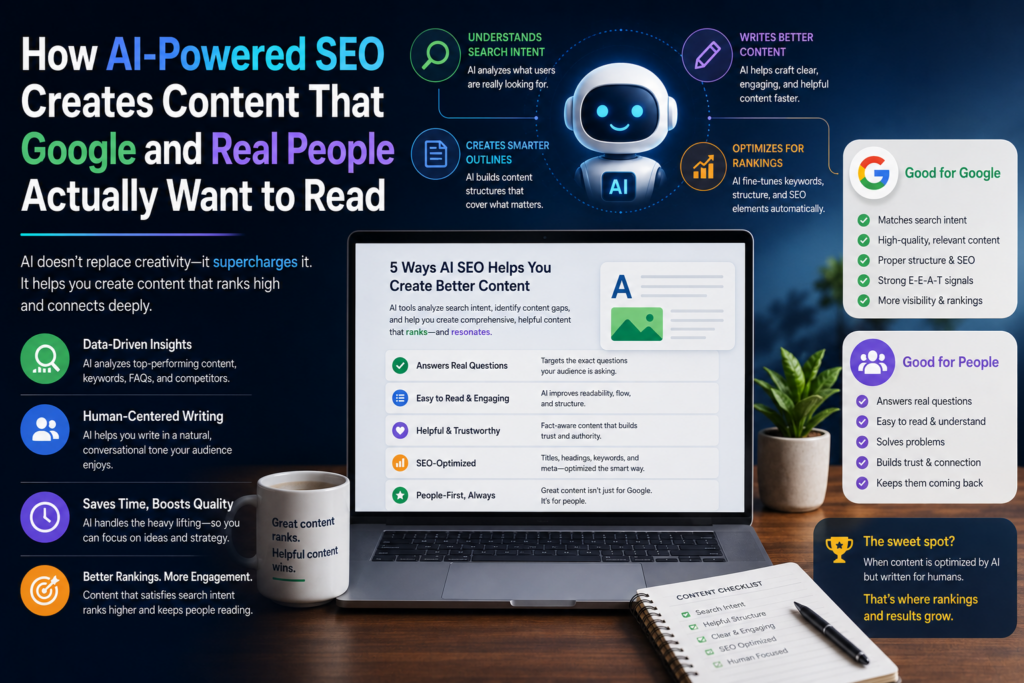
There is a version of AI content that Google hates and readers abandon in ten seconds. You have probably landed on it. Generic paragraphs that technically answer a question but feel assembled from parts, with all the warmth and specificity of a user manual. Nobody shares it. Nobody links to it. Google has gotten remarkably good at identifying it. Then there is a different version: content informed by AI research, structured by AI analysis, but written with a real human voice and actual expertise behind it. That is what ranks in 2026. And the gap between those two outcomes is entirely about how you use the tools.
Why AI Content Has a Reputation Problem and Why It is Earned
When AI writing tools became widely available, a lot of businesses treated them as a content machine: prompt in, article out, publish immediately. The result was a wave of technically SEO-formatted content that said nothing interesting to no one in particular. Google helpful-content system was built specifically to address this. It evaluates whether content demonstrates real experience, expertise, authoritativeness, and trustworthiness, a framework called E-E-A-T. A page written entirely by AI that has never installed a water heater or treated a patient fails this test. Not because it is AI-generated, but because it lacks the specificity and credibility that comes from genuine knowledge.
What AI Does Well in Content Creation
Used properly, AI-powered SEO tools handle several parts of the content process faster than a human working alone. Research and structure: AI tools analyze the top-ranking pages for your target keyword and identify what questions they answer, what subheadings they use, and what word counts satisfy search intent. Readability optimization: AI tools analyze a draft for passive voice, sentence length variation, and paragraph structure. Keyword integration: AI tools flag when a keyword is missing from important places without pushing toward unnatural repetition. Gap identification: AI content analysis tools compare your existing content against competitors and identify topics your site has not covered.
What Only Humans Can Add and Why It Matters for Rankings
Google systems reward content that reflects real-world experience. The signals that establish genuine expertise include specific examples with real details, first-person perspective where appropriate, acknowledging complexity honestly, and original data or case studies. A single real example from your own business adds more credibility than three paragraphs of general advice. AI can prompt you to include these things. But the actual substance has to come from you.
The Content Structure Google Rewards in 2026
AI SEO analysis has made it much clearer what page structure Google tends to favor. For most informational and commercial content, the winning structure includes a hook that gets to the point immediately, a clear direct answer to the main question early in the page, subheadings that map to real follow-up questions, at least one section with structured content like a list or comparison table, a FAQ section addressing People Also Ask questions, and a closing section with a concrete next action. AI tools generate content briefs built around this structure automatically. A human writer then fills it with real substance.
Engagement Signals: Why How People Read Matters as Much as What You Write
Google measures how users interact with your content. Pages where visitors scroll, stay a while, and do not immediately bounce back to search results are rewarded over time. Pages that people abandon in ten seconds are penalized, no matter how well-optimized the metadata is. This makes readability and engagement a direct SEO factor. AI-powered SEO tools measure time on page compared to industry benchmarks, scroll depth, and bounce rate from organic traffic. When these metrics are poor for a specific page, AI tools flag it and recommend specific structural changes. The AI can diagnose the problem. A human has to make the content worth reading.
Common Mistakes When Using AI for Content Creation
Publishing without a human review. AI drafts need editing, not just proofreading but actual review for accuracy and whether the content reflects real expertise. Using AI to scale thin content. Ten AI-written pages with no original insight is worse than one well-researched page with genuine depth. Ignoring the brief. AI content tools generate detailed recommendations. Skipping the structure they suggest produces worse results. Letting AI set the tone entirely. AI writing defaults to a neutral register. Edit for voice. It makes content more memorable and more likely to earn links.
FAQ: AI Content and SEO Quality
Will Google penalize AI-generated content? Google evaluates content quality, not how it was produced. Thin unhelpful content gets penalized whether a human or AI wrote it. How much human editing does AI content need? Plan to spend at least 30 to 60 minutes editing and adding real-world specifics to any AI-drafted blog post before publishing. Can AI help with existing content, not just new pages? Yes, and this is often where the highest ROI is. AI content audit tools identify your existing pages that are underperforming and generate specific recommendations for updating them.
The Bottom Line
The businesses producing content that Google and real readers both want to engage with in 2026 have figured out a simple division of labor: let AI handle research, structure, and optimization analysis. Let humans bring the experience, voice, and genuine insight that makes content worth reading in the first place. Start by picking your most important service page. Run it through an AI content analysis tool. Look at what is missing compared to top-ranking competitors. Then fill those gaps with something an AI could not write on its own: your real experience.
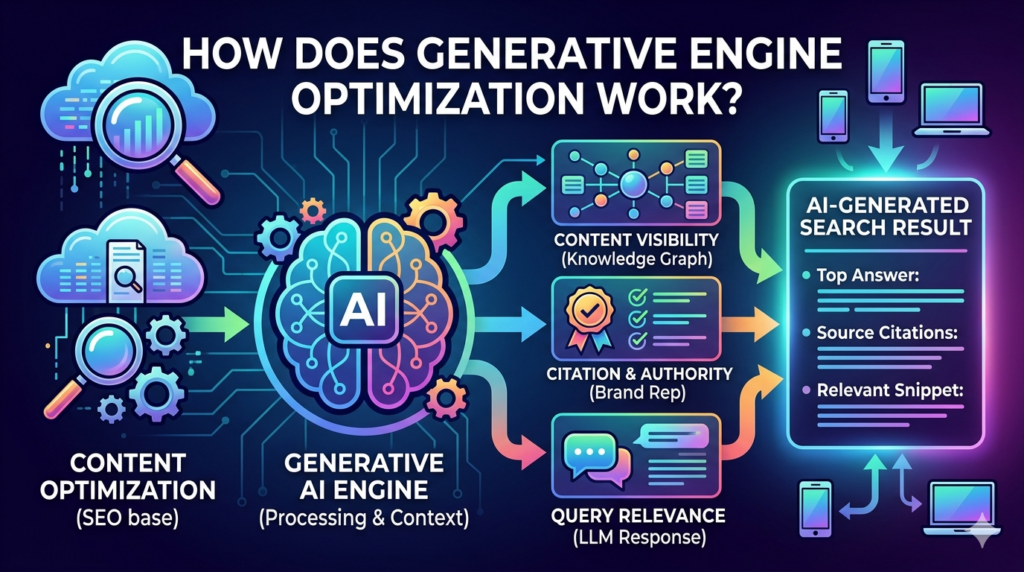
Author: ABC Editorial Team | GEO & AI Visibility Specialists | ABC (abcleadgen.com) Last updated: June 2026 | Next review: Monthly AI Question Map Keyword / topic: how does generative engine optimization work AI-style user question: “What is the underlying mechanism that makes a piece of content get cited by ChatGPT or Perplexity — what […]
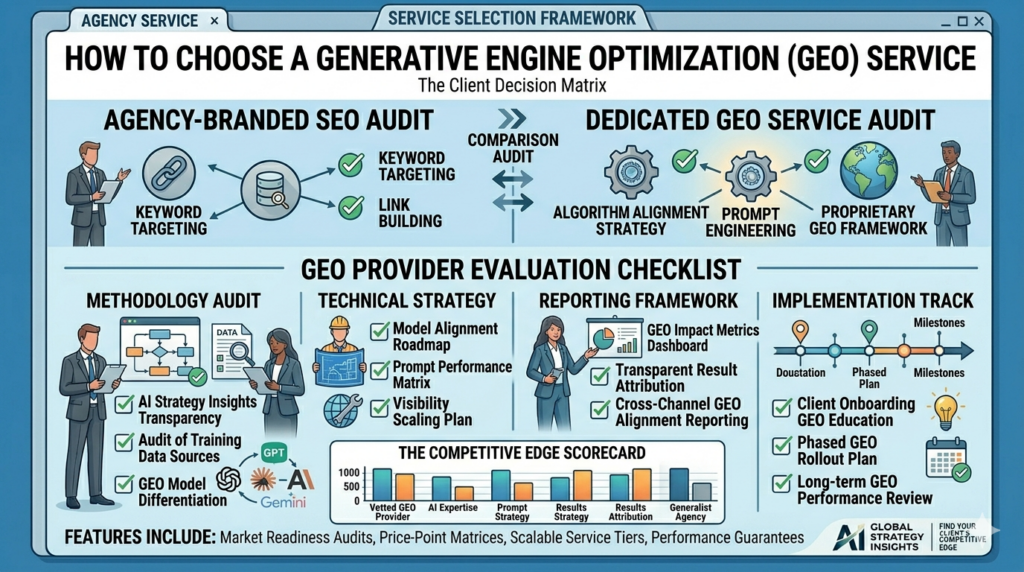
Entity Inventory Table Entity Definition Type Authoritative Source Generative Engine Optimization (GEO) The practice of structuring content so AI language models can discover, extract, and cite it in their responses Concept schema.org/CreativeWork Large Language Models (LLMs) AI systems trained on vast text corpora that generate human-like text responses to user queries Concept OpenAI, Anthropic, Google […]
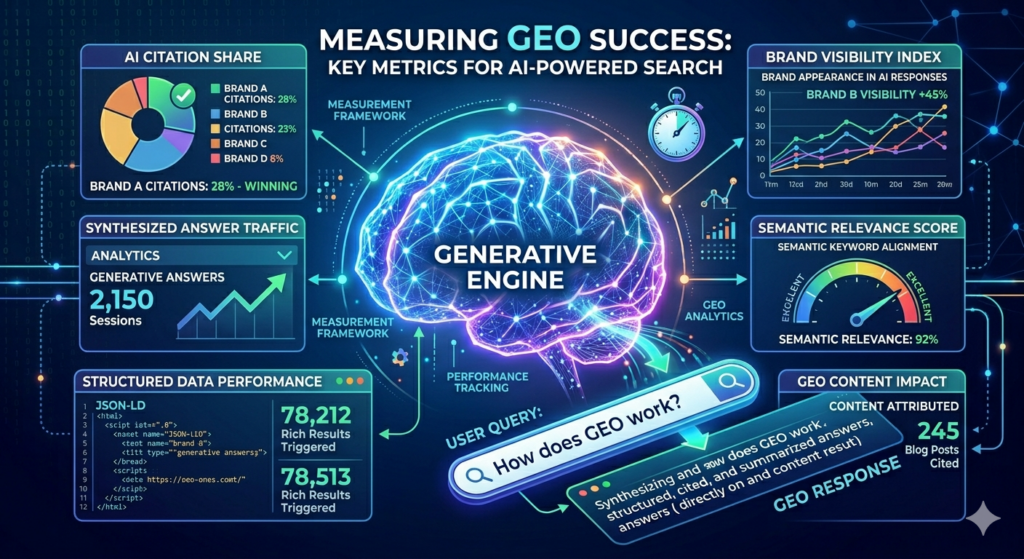
Author: ABC Editorial Team | GEO & AI Visibility Specialists | ABC (abcleadgen.com) Last updated: June 2026 | Next review: Monthly AI Question Map Keyword / topic: how to measure the success of generative engine optimization campaigns AI-style user question: “How do I know if my GEO content program is actually working — what specific […]
