
The 7 Biggest SEO Mistakes AI Can Help You Fix Automatically
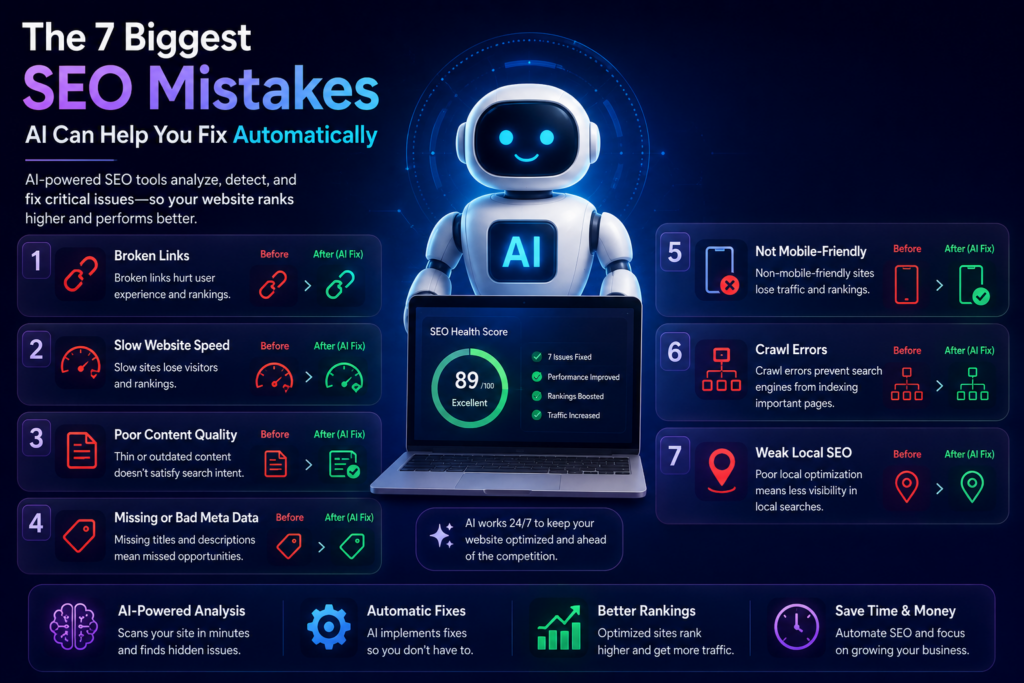
Most business owners do not lose Google rankings in one dramatic moment. It happens slowly. A broken link here, a missing meta description there, a page that loads two seconds too slowly on mobile. None of it feels urgent until you have slipped from page one to page three and have no idea why. The good news: the majority of SEO problems dragging down local and small business websites are fixable. And in 2026, AI tools can catch most of them before you even know they exist.
Mistake 1: Broken Links That Kill Crawlability
A broken link does two bad things at once. It frustrates real visitors who click it and go nowhere, and it wastes crawl budget, the limited attention Google bots give your site on each visit. Left unaddressed for months, broken links signal to Google that your site is not well-maintained. AI-powered site auditing tools scan your entire website automatically and flag every broken internal and external link. Some can even suggest the correct replacement URL when an old page has been moved. What used to require a manual crawl now happens on a schedule with alerts sent to your inbox.
Mistake 2: Slow Page Speed Especially on Mobile
If your pages take more than three seconds to load on a phone, a significant portion of visitors leave before they see your content and Google knows it. Common culprits include oversized images, too many third-party scripts, unminified code, and hosting that is not fast enough. AI tools integrate with Google Core Web Vitals data to pinpoint exactly which elements cause slowdowns. Instead of a vague warning, they tell you: this specific image on this specific page is 4MB and needs compression. The diagnosis that used to require a developer now takes minutes.
Mistake 3: Thin or Duplicate Content Dragging Down Authority
Thin content, pages with less than 300 words, generic product descriptions, or service pages that say almost nothing, is one of the most widespread SEO problems on small business websites. Google helpful-content systems now actively identify and devalue it. Duplicate content splits ranking signals and confuses Google about which version to index. AI content analysis tools audit your existing pages for both issues, compare your content against what is ranking for your target keywords, and flag near-duplicate sections. Some tools generate specific recommendations for expanding thin pages, not just add more words, but add a FAQ section addressing these three questions that appear in People Also Ask.
Mistake 4: Missing or Poorly Written Metadata
Meta titles and descriptions do not directly move rankings but they dramatically affect click-through rates. If your page shows up on Google with a title cut off mid-sentence or a description that just repeats the page URL, you are losing clicks to competitors whose snippets are clear and compelling. AI tools audit every page for missing, duplicate, or over-length metadata and generate optimized versions based on your target keyword and the page actual content. This is one of the highest-ROI quick fixes available and can lift click-through rates noticeably within weeks.
Mistake 5: Poor Local Optimization and Inconsistent NAP Data
NAP stands for Name, Address, Phone Number. For local businesses, consistency in how this information appears across the web is a foundational ranking signal. If your Google Business Profile says Suite 200 but your website says Ste. 200 and Yelp shows a different phone number, you are sending conflicting signals that suppress local rankings. AI-powered local SEO tools scan hundreds of directories automatically, identify inconsistencies, and either flag them for manual correction or push updates across platforms in bulk. What would take hours of manual searching gets done in a single audit run.
Mistake 6: Ignoring Schema Markup
Schema markup is structured data added to your website code that helps Google understand what your content means, not just what it says. A local business with proper schema markup can display star ratings, business hours, price ranges, and service areas directly in search results. Most small business websites have zero schema markup. AI tools now generate schema markup automatically based on your business type, content, and existing website structure. You do not need to write JSON-LD by hand. The tool produces the code, and a simple plugin adds it to your site.
Mistake 7: Not Tracking the Right Metrics
Many small businesses track vanity metrics like total website visitors and social media followers while ignoring the numbers that actually show whether SEO is working. The metrics that matter: keyword ranking positions for your target terms, organic traffic from your specific service area, click-through rates from Google Search Console, and conversion actions from organic visitors. AI-powered reporting tools pull all of this into a single dashboard, surface the trends that matter, and alert you when something changes significantly. Instead of spending an afternoon pulling reports, you get a weekly summary that tells you exactly what improved and what to focus on next.
Common Mistakes People Make When Using AI SEO Tools
Running one audit and never checking again. SEO problems are ongoing. Set audits to run on a schedule. Fixing everything at once without prioritizing. Focus first on technical errors affecting crawlability and page speed, then metadata, then content. Ignoring the recommendations. A perfectly generated meta description sitting in a report nobody reads does not help your rankings.
FAQ: AI-Automated SEO Fixes
Can AI tools fix these problems automatically, or do they just identify them? Both, depending on the tool and the issue. Metadata can often be updated through an SEO platform. NAP consistency tools push corrections in bulk. Some things like improving thin content still require a human. How often should I run an AI SEO audit? Monthly at minimum. If your site publishes frequently, weekly automated scans are worth it. Are AI SEO tools accurate enough to trust? For technical issues like broken links and missing metadata, yes. For content quality assessments, treat their recommendations as a starting point.
Start With One Fix This Week
Run a free audit on your site and look at the top five issues it surfaces. Pick the one with the highest severity that you can realistically address this week and fix it. The SEO mistakes AI can help you fix automatically are not exotic or complicated. They are the accumulated small neglects that most businesses do not notice until rankings drop. Catching them early, with tools that do the scanning for you, is one of the most practical advantages AI brings to small business marketing in 2026.
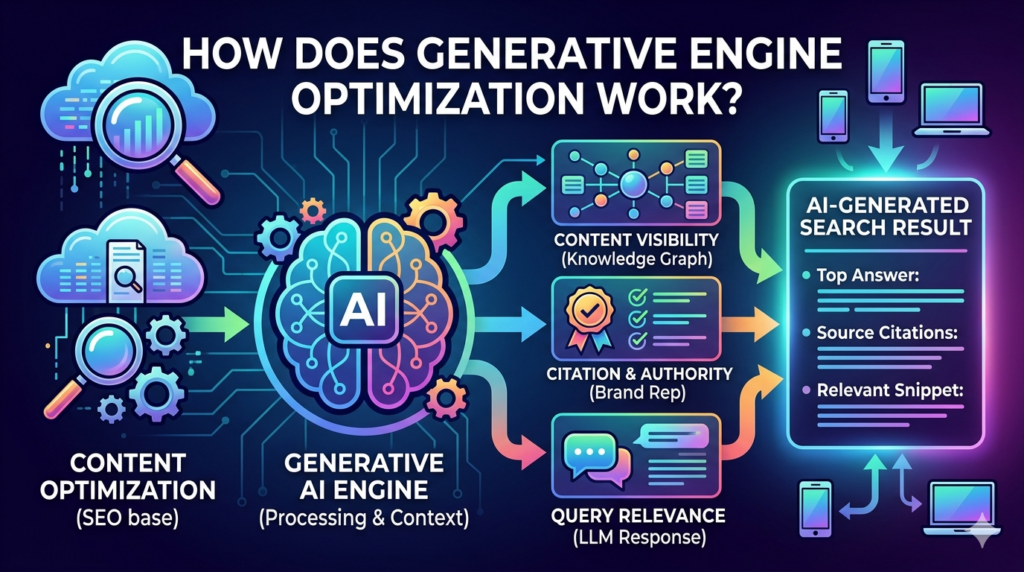
Author: ABC Editorial Team | GEO & AI Visibility Specialists | ABC (abcleadgen.com) Last updated: June 2026 | Next review: Monthly AI Question Map Keyword / topic: how does generative engine optimization work AI-style user question: “What is the underlying mechanism that makes a piece of content get cited by ChatGPT or Perplexity — what […]
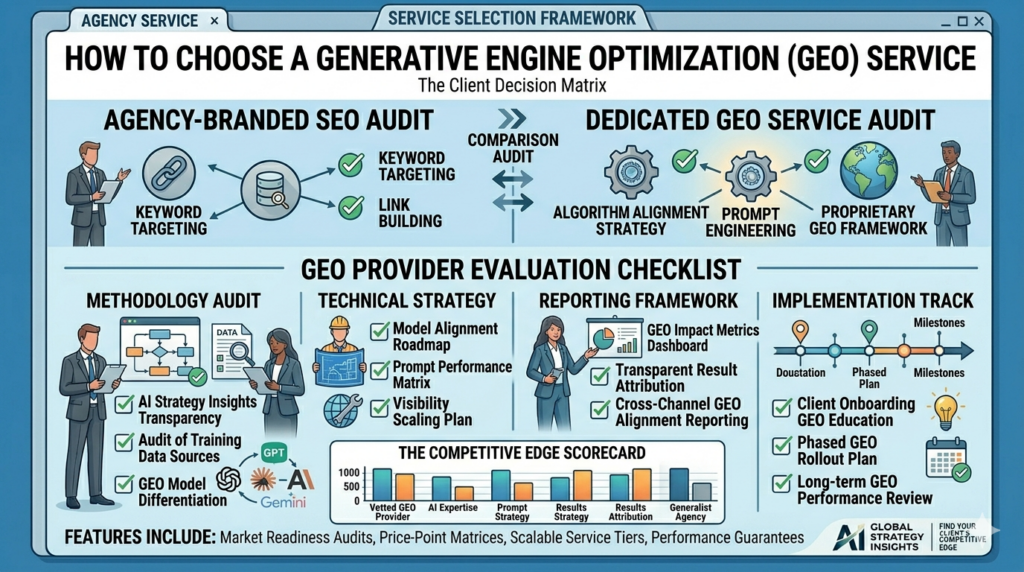
Entity Inventory Table Entity Definition Type Authoritative Source Generative Engine Optimization (GEO) The practice of structuring content so AI language models can discover, extract, and cite it in their responses Concept schema.org/CreativeWork Large Language Models (LLMs) AI systems trained on vast text corpora that generate human-like text responses to user queries Concept OpenAI, Anthropic, Google […]
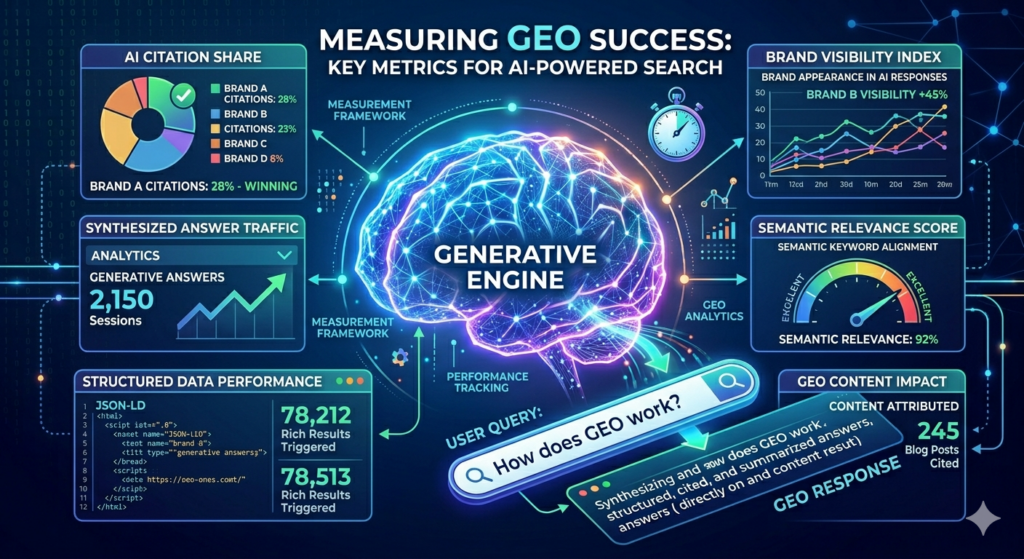
Author: ABC Editorial Team | GEO & AI Visibility Specialists | ABC (abcleadgen.com) Last updated: June 2026 | Next review: Monthly AI Question Map Keyword / topic: how to measure the success of generative engine optimization campaigns AI-style user question: “How do I know if my GEO content program is actually working — what specific […]
